
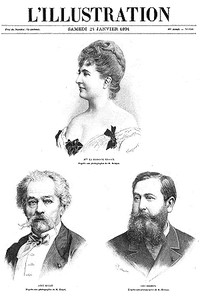
L'Illustration, No. 2500, 24 Janvier 1891 by Various
Let's be clear: this isn't a book with a traditional plot. 'L'Illustration, No. 2500' is a snapshot. It's the complete January 24, 1891, issue of what was essentially the Life magazine of 19th-century France. You don't read it from start to finish like a story; you explore it like a museum exhibit.
The Story
The 'story' is the week of January 24, 1891, as seen through French eyes. The lead article is a gripping, on-the-ground report about the assassination of a Russian general, with detailed woodcut illustrations reconstructing the event. It's serious, international journalism. But turn the page, and the tone shifts completely. You find lush fashion spreads predicting spring trends, reviews of the latest Parisian plays, and scientific articles about new discoveries. There are elaborate advertisements for champagne, sewing machines, and the revolutionary 'safety bicycle.' It's a chaotic, beautiful mix of high politics, commerce, art, and daily life, all packaged together.
Why You Should Read It
I loved this because it destroys the idea of the past as a simple, monolithic thing. This magazine shows a society in motion. One column expresses anxiety over political instability in Europe, while another breathlessly celebrates the convenience of new electric lights. The illustrations are incredible—they're not just decorations; they were how people saw the world before photography was commonplace in print. You get a real sense of the optimism of the Belle Époque, that feeling that technology and art were building a brighter future, but also the undercurrents of tension that we, with hindsight, know were leading toward the 20th century's wars. It’s history without the textbook summary; it's the raw material.
Final Verdict
Perfect for history buffs who are tired of dry biographies, for art lovers fascinated by illustration, and for anyone with a strong sense of curiosity. If you enjoy getting lost in archives or love the tactile feel of old magazines, this digital (or rare print) artifact is a treasure. It's not a light beach read, but a deeply engaging piece of historical exploration. You come away not with a plot resolved, but with a vivid, almost tactile impression of a moment in time.
This text is dedicated to the public domain. Distribute this work to help spread literacy.
Melissa Lewis
1 year agoFast paced, good book.
Patricia Miller
1 year agoVery helpful, thanks.
Ashley Gonzalez
1 year agoTo be perfectly clear, the narrative structure is incredibly compelling. Thanks for sharing this review.
Paul Jones
6 months agoCompatible with my e-reader, thanks.



Anthony Hill
1 year agoFinally found time to read this!