
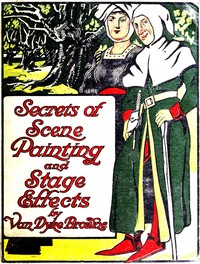
Secrets of scene painting and stage effects by Will Goldston
Let's be clear: this isn't a novel with a plot. It's a practical guidebook, but its story is the story of stagecraft itself. Published in 1913, it captures the peak of practical, handmade theatrical illusion.
The Story
The book walks you through the entire process of creating a theatrical world from scratch. Goldston starts with the fundamentals of the scene painter's workshop—the types of brushes, paints, and glues. Then, he builds up to the big effects. He explains how to paint realistic-looking marble, wood grain, and brick on flat canvas. He details methods for creating moving scenery, like how to make a convincing waterfall or a starry night sky that actually twinkles. The most exciting sections are on special effects: producing stage lightning, fog, rain, and even simple apparitions. The 'story' is the transformation of an empty stage into a forest, a palace, or a storm-tossed ship, using nothing but skill, paint, and clever mechanics.
Why You Should Read It
Reading this book feels like a direct conversation with a master craftsman. Goldston's voice is straightforward and packed with know-how. There's a charm in the low-tech brilliance of these solutions. In our digital age, where any effect is possible with a computer, there's something deeply satisfying about learning how to make 'magic' with ropes, pulleys, and carefully mixed paints. It rekindles an appreciation for the sheer physical artistry of old theater. You start to see the stage not just as a place for actors, but as a giant, intricate machine for storytelling, where every painted shadow and rolling cloud was placed by hand with deliberate purpose.
Final Verdict
This book is a treasure for a specific but passionate audience. It's perfect for theater history nerds, practicing stage designers looking for classic techniques, hobbyists who love practical projects, and anyone fascinated by the history of magic and illusion. If you love peeking behind the curtain—literally—this is your ultimate guide. It's a specialized read, but for the right person, it's absolutely captivating. Just be prepared for the strong smell of linseed oil and size glue to practically waft off the pages.
This book is widely considered to be in the public domain. You do not need permission to reproduce this work.
Christopher Thomas
1 month agoThe clarity of the introduction set high expectations, and it addresses the common misconceptions in a very professional manner. A trustworthy resource that I'll keep in my digital library.
Kimberly Wilson
7 months agoI started reading this with a critical mind, the author doesn't just scratch the surface but goes into meaningful detail. The insights gained here are worth every minute of reading.
Donald Jackson
1 year agoA brilliant read that I finished in one sitting.


Thomas Davis
2 years agoComparing this to other titles in the same genre, the formatting on mobile devices is surprisingly crisp and clear. This has become my go-to guide for this specific topic.