About 342 minutes
The Brother of Daphne — Reading Companion
Historical Psychological Social Fiction
78,462 recorded words. 18 minutes difference from this book's estimate.
View Gutenberg source #748
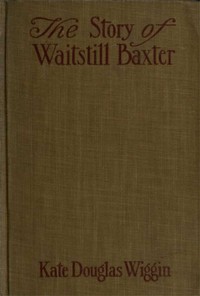
This digital edition of The Story of Waitstill Baxter — Text and Context is described by source-level measurements including 82,608 words, 6 hr estimated reading time, and 10 detected text sections.
The text analysis averages about 21.3 words per sentence, while the detected sections provide another way to judge how the source is divided.
Project Gutenberg metadata also associates the work with “Sisters -- Fiction,” connecting these edition facts with the source record’s subject description.
Explore this collection
These alternatives are selected using recorded categories and estimated reading time.
About 342 minutes
Historical Psychological Social Fiction
78,462 recorded words. 18 minutes difference from this book's estimate.
View Gutenberg source #748About 341 minutes
Historical Psychological Social Fiction
78,324 recorded words. 19 minutes difference from this book's estimate.
View Gutenberg source #416About 324 minutes
Historical Psychological Social Fiction
74,487 recorded words. 36 minutes difference from this book's estimate.
View Gutenberg source #362Search stored excerpts and compare books → Choose by your preferences →
Choices use stored catalog measurements. Estimates vary with reading speed. A shared category is a catalog label, not a claim that two books have the same argument or literary quality.
Search reads excerpt text stored with this catalog and links to its associated Gutenberg record. The connection is stored in the site database; this tool does not recheck that every excerpt is word-for-word identical to that external record. Excerpt search does not cover every chapter and does not verify historical publication dates.
Catalog snapshot checked: 2026-09-25. Coverage: 92 public books, 92 available source excerpts.
Calculated from edition completeness, EPUB availability, text structure and catalogue metadata. Not a user rating.
Total of 100 points, scaled to a 2.5-5.0 range. Editions with an empty description or a missing EPUB file are not scored.
Public-domain source text
The source text is kept in the dedicated reader, separate from this catalogue record and its commentary.
The novel opens not with a character but with the Saco River, tracing its course from New Hampshire's granite hills to the sea. This extended geographical prelude establishes water as a governing image: the river is described as a 'mirror of placid loveliness above the dam, a tawny, roaring wonder at the fall,' and a 'mad, white-flecked torrent' beyond. The river's movement—from mountain rill to merging streams, then over dams and through defiles—mirrors the narrative's own structure, which proceeds through seasons (Spring, Summer, Autumn, Winter) and across the twin hamlets of Edgewood and Riverboro.
The opening chapter, 'Saco Water,' functions as a prose map. Wiggin devotes several paragraphs to the river's geography before introducing any human figure. This is not mere scene-setting; the river becomes a recurring reference point. The narrative returns to the water at key moments—above the dam, at the falls, in the 'sunny reaches near Pleasant Point'—using its constancy to anchor the seasonal shifts. The river's 'impetuous journey to the sea' parallels the emotional currents of the Baxter household, though the text does not explicitly state this connection. Readers should note how often a character's mood or a plot turn is accompanied by a glance at the water.
The table of contents is organized into four seasonal sections: Spring, Summer, Autumn, Winter. Each contains roughly eight to nine chapters, creating a calendar-like rhythm. The spring chapters introduce the sisters and the Deacon's household; summer brings the joiner's shop, Tory Hill, and haying-time; autumn includes a 'brace of lovers' and harvest; winter culminates in a wedding-ring, a confessional, and the Deacon's Waterloo. This structure suggests a year in the life of the community, though the excerpts do not confirm that all action occurs within a single year. The seasonal headings give the novel a cyclical, almost ritualistic pacing, with each season carrying its own set of associations—spring for awakening, winter for confrontation.
Late in the excerpts, the narrative shifts abruptly into a first-person manuscript by a character named Ivory. This embedded text recounts the history of a religious figure named Cochrane, his trial, imprisonment, and the epitaph he composed for himself. The manuscript is presented as Ivory's own writing, with parenthetical asides ('I am again trying to plead the cause of my father and mother') and admissions of uncertainty ('I have no means of knowing this to a certainty'). This sudden change in voice and format—from third-person omniscient to first-person historical testimony—introduces a documentary layer. The manuscript's subject, Cochrane's delusion and downfall, stands in stark contrast to the domestic tensions of the Baxter household, though the excerpts do not reveal how or why this document surfaces.
Several chapters in the winter section suggest physical and psychological barriers: 'Locked Out,' 'Patty Is Shown the Door,' 'Sentry Duty,' 'The House of Aaron.' The image of a door recurs in the Cochrane anecdote, where a preacher stands 'within the door-frame' and delivers a warning. Ivory's manuscript also describes Cochrane's imprisonment in Charlestown State Prison. The Baxter household, with its stern Deacon father, may itself function as a kind of confinement. The excerpts do not confirm that the sisters are literally locked out, but the chapter titles and the prison imagery in the embedded narrative create a pattern of thresholds—crossed, barred, or guarded. Readers should attend to who stands where in relation to doors and windows.
Because the excerpts provide only the opening and a later section containing Ivory's manuscript, the full relationship between the river imagery, the seasonal structure, and the historical digression remains incomplete. Readers will need to track how the manuscript is introduced and whether its themes of religious delusion and imprisonment echo in the main plot. The novel rewards attention to its physical settings—water, doorways, seasons—as more than backdrop; they are the framework on which the story is built.
I’ve often thought of The Story of Waitstill Baxter and how its river moves through seasons, carrying hidden manuscripts like quiet currents. A book remembers such burdens. That’s why I keep Dust — A Closer Reading nearby; it understands how fragments settle into meaning, patiently, as dust settles on an open page.
Build a private reading journal entry for this title.