About 367 minutes
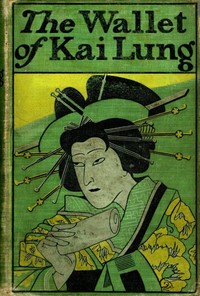
The Wallet of Kai Lung — Story, Setting & Ideas
Fantasy Juvenile Worlds
84,181 recorded words. 3 minutes difference from this book's estimate.
View Gutenberg source #1076
The catalog record for Bucky O'Connor: A Tale of the Unfenced Border — Edition Insights provides practical reading context through 83,710 words, 6 hr 4 min estimated reading time, and 25 detected text sections.
The text analysis averages about 13.8 words per sentence, while the detected sections provide another way to judge how the source is divided.
Project Gutenberg metadata also associates the work with “Fiction,” connecting these edition facts with the source record’s subject description.
Explore this collection
These alternatives are selected using recorded categories and estimated reading time.
About 367 minutes
Fantasy Juvenile Worlds
84,181 recorded words. 3 minutes difference from this book's estimate.
View Gutenberg source #1076About 381 minutes
Fantasy Juvenile Worlds
87,503 recorded words. 17 minutes difference from this book's estimate.
View Gutenberg source #1699About 333 minutes
Fantasy Juvenile Worlds
76,475 recorded words. 31 minutes difference from this book's estimate.
View Gutenberg source #538Search stored excerpts and compare books → Choose by your preferences →
Choices use stored catalog measurements. Estimates vary with reading speed. A shared category is a catalog label, not a claim that two books have the same argument or literary quality.
Search reads excerpt text stored with this catalog and links to its associated Gutenberg record. The connection is stored in the site database; this tool does not recheck that every excerpt is word-for-word identical to that external record. Excerpt search does not cover every chapter and does not verify historical publication dates.
Catalog snapshot checked: 2026-09-25. Coverage: 92 public books, 92 available source excerpts.
Calculated from edition completeness, EPUB availability, text structure and catalogue metadata. Not a user rating.
Total of 100 points, scaled to a 2.5-5.0 range. Editions with an empty description or a missing EPUB file are not scored.
Public-domain source text
The source text is kept in the dedicated reader, separate from this catalogue record and its commentary.
The novel opens not on the open range but aboard a speeding Limited train, where the heroine first notices Bucky O'Connor through a Pullman window during a forced halt. This confined, mobile setting establishes a pattern: Raine repeatedly stages key encounters in transit or enclosure—train cars, prison cells, secret chambers—rather than on the fenceless border the title promises. The movement between these spaces, often sudden and jarring, drives the narrative forward.
The Limited train is more than transportation; it is a stage for first impressions and power struggles. The heroine observes Bucky's "spectacular entrance" from her section, while the conductor protests his unauthorized flagging of the train. This scene establishes Bucky as a figure who disrupts routine, entering spaces by force of will. The train's confined aisles and compartments become a microcosm of the border society Raine depicts, where authority is challenged and social codes are tested in close quarters.
In the prison cell, darkness strips away visual cues and forces reliance on sound and touch. When Bucky is thrown into utter blackness, he first hears breathing, then a "small, trembling voice." The recognition scene hinges on voice alone: "That voice—were he sunk in twice as deep and dark an inferno—he would know it among a thousand." Raine uses the cell's gloom to heighten emotional intensity, turning a potential horror into a reunion. The darkness also allows Bucky to cross a social boundary, touching the heroine's face in a gesture that would be impossible in daylight.
Despite the subtitle, the border appears less as a physical landscape than as a legal and moral threshold. The narrative moves from American train to Mexican prison, from the rule of law to military tribunals. The governor Megales, a "butcher" from the Mexican war, represents a lawless authority that Bucky must navigate. The border is a line between jurisdictions, but also between safety and danger, civilization and wilderness. Raine's characters cross it repeatedly, each time facing new rules and risks.
From the train compartment to the prison cell to the "secret chamber" of a later chapter, confinement structures the plot. Bucky is repeatedly trapped—by train officials, by a military tribunal, by a locked cell—and must escape through wit or force. The cell scene is the most vivid: a damp, sloping corridor, a ponderous iron door, and a fall into darkness. Yet even here, the presence of the heroine transforms the space. Raine uses confinement not only as a plot device but as a crucible for character revelation.
Readers attentive to Raine's spatial choices will notice how the unfenced border of the title is less a setting than a promise of freedom that the characters are always approaching or being denied. The novel's structure—a series of enclosures punctuated by sudden movements—creates a rhythm of tension and release. Pay particular attention to how each new space redefines the relationships between characters.
I kept thinking about how darkness works in Bucky O'Connor, those moments of recognition in near-blackness, and somehow my mind drifted to The Kingdom of the Blind — Background and Themes. It’s odd—both feel like stories where people only truly see each other when everything else falls away. I remember sitting with that thought, the way dust settles slowly.
Build a private reading journal entry for this title.