About 364 minutes
Bucky O'Connor: A Tale of the Unfenced Border — Edition Insights
Fantasy Juvenile Worlds
83,710 recorded words. 3 minutes difference from this book's estimate.
View Gutenberg source #1809
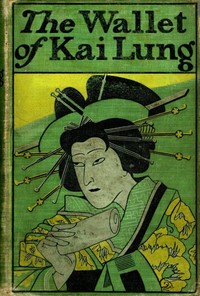
The Wallet of Kai Lung — Story, Setting & Ideas can be approached with a clearer sense of reading commitment from its source measurements: 84,181 words, 6 hr 7 min estimated reading time, and 14 detected text sections.
The text analysis averages about 41.0 words per sentence, while the detected sections provide another way to judge how the source is divided.
Project Gutenberg metadata also associates the work with “Fantasy fiction,” connecting these edition facts with the source record’s subject description.
Explore this collection
These alternatives are selected using recorded categories and estimated reading time.
About 364 minutes
Fantasy Juvenile Worlds
83,710 recorded words. 3 minutes difference from this book's estimate.
View Gutenberg source #1809About 381 minutes
Fantasy Juvenile Worlds
87,503 recorded words. 14 minutes difference from this book's estimate.
View Gutenberg source #1699About 399 minutes
Fantasy Juvenile Worlds
91,731 recorded words. 32 minutes difference from this book's estimate.
View Gutenberg source #1447Search stored excerpts and compare books → Choose by your preferences →
Choices use stored catalog measurements. Estimates vary with reading speed. A shared category is a catalog label, not a claim that two books have the same argument or literary quality.
Search reads excerpt text stored with this catalog and links to its associated Gutenberg record. The connection is stored in the site database; this tool does not recheck that every excerpt is word-for-word identical to that external record. Excerpt search does not cover every chapter and does not verify historical publication dates.
Catalog snapshot checked: 2026-09-25. Coverage: 92 public books, 92 available source excerpts.
Calculated from edition completeness, EPUB availability, text structure and catalogue metadata. Not a user rating.
Total of 100 points, scaled to a 2.5-5.0 range. Editions with an empty description or a missing EPUB file are not scored.
Public-domain source text
The source text is kept in the dedicated reader, separate from this catalogue record and its commentary.
From the first sentence, Kai Lung addresses passers-by with elaborate self-deprecation: “It is indeed unlikely that you could condescend to stop and listen to the foolish words of such an insignificant and altogether deformed person as myself.” This opening establishes the narrative voice—a blend of ornate politeness, wit, and strategic humility that pervades the frame story. The book presents itself as a collection of tales told by a traveling storyteller, but the frame is no mere container: it begins with Kai Lung walking alone through a camphor-laurel forest, aware of danger, and immediately encountering the brigand Lin Yi. The pace shifts from leisurely, market-place address to tense, immediate threat, setting up a pattern where the storytelling itself becomes a survival tactic.
Kai Lung’s narration is consistently marked by extreme politeness and ironic self-diminishment. He calls himself “this exceedingly unprepossessing individual” and claims his words are “foolish.” Yet this humility is a rhetorical weapon: when warned about bandits, he replies that “a worthless garment covered one with better protection than that afforded by an army of bowmen.” The voice is not static; it adapts to circumstance. In the frame, his internal thoughts reveal a calculating mind—he changes his expression to “a mask of impassiveness and extreme unconcern” when he spots the matchlock. The tales within, however, shift to a more formal, almost mock-epic tone, with elaborate descriptions of courtly entertainments and insect trainers. The contrast between the frame’s immediate, physical danger and the tales’ leisurely, ornate digressions creates a layered reading experience where the storyteller’s persona is as much a performance as the stories themselves.
The book alternates between two distinct paces. The frame narrative moves briskly: Kai Lung walks, encounters a brigand, and must talk his way out. The prose here is direct, with concrete details like “the barrel of a matchlock” and “twenty li or more still between him and the city of Knei Yang.” In contrast, the inset tales slow down considerably, filled with elaborate descriptions of court rituals, insect performances, and philosophical asides. For example, the tale of Sen Heng describes the Emperor’s Provider performing a feat of “striking together both the hands and the feet thrice simultaneously, while leaping into the air”—a sentence that itself mimics the convoluted action. This rhythmic shift is not arbitrary; it mirrors Kai Lung’s strategy of using stories to delay, distract, or placate his captors. The reader experiences the tension of the frame’s interrupted progress against the expansive, digressive flow of the tales.
Several motifs recur across the excerpts. One is the theme of performance and audience: Kai Lung is a storyteller performing for passers-by, and within the tales, characters like the Provider perform for the Emperor. The success of these performances is measured by the audience’s reaction—the Emperor’s “uncontrollable state of amusement” or his “unsympathetic” remarks. Another recurring detail is the use of animals or insects as trained performers: in one tale, Sen Heng trains insects to go through “the ordinary details of their domestic affairs,” and the Provider imitates a bee. These miniature performances within the larger narrative echo Kai Lung’s own situation, where his tales are a form of trained entertainment meant to secure his safety. The language of bargaining also appears: Sen Heng regrets not asking for two taels instead of one, and Kai Lung’s opening address is a negotiation for attention. These details tie the frame and tales together without requiring knowledge of the full plot.
Readers may find it useful to pay attention to the transitions between the frame and the inset tales, noting how the narrator’s voice and the pace change. The book rewards those who enjoy wordplay, ironic politeness, and stories within stories. Because the excerpts are incomplete, the ultimate fate of Kai Lung and the full arc of his journey remain unknown, but the pattern of storytelling as a survival strategy is established early and consistently.
Reading about Kai Lung’s patience, the way he spins tales while walking a dangerous road, made me think of a summer I spent hiding from my own troubles. The Story of a Bad Boy — Reading Companion had that same quiet warmth—a boy making sense of himself through small, unheroic moments. Bramah’s ornate irony feels distant, but the comfort in both is real.
Use these questions to collect your thoughts before moving on.